Why Authentic Reproduction Rings Feel Different
A ring can borrow the look of the past, or it can carry a traceable relationship to it. Authentic reproduction rings belong to the second tradition: pieces made from a documented historical source, with its period, form and place of discovery treated as part of the jewellery’s meaning. They are not merely styled to appear ancient. They are made to keep an artefact’s character alive in a form that can be worn every day.
For many people, that distinction changes the purchase entirely. A Celtic spiral, a Roman intaglio setting or a medieval devotional motif becomes more than decoration when it can be connected to a real object and a real place in Britain. The ring may mark an engagement, anniversary or personal milestone, but its story began centuries before.
What makes a reproduction ring authentic?
Authenticity in historical jewellery does not mean pretending a new ring is an excavated antique. A newly made piece should be honestly presented as such. Its authenticity lies in the integrity of the reproduction: a recognisable relationship to the original find, respect for the source material and skilled making in appropriate precious metals.
The strongest reproductions begin with provenance. That means identifying the historical era of the artefact, whether Celtic, Roman, Viking, Anglo-Saxon, medieval or Tudor, and recording where it was found. A ring inspired loosely by “Viking style” may be attractive, but it offers a different experience from one based directly on a particular British archaeological object. The latter gives the wearer a specific point of connection, not a general impression of history.
Form matters too. Ancient jewellery was made by human hands, often with slight asymmetry, powerful relief or motifs shaped by the limitations of the original process. Those details are easily smoothed away when a design is modernised for mass production. An authentic reproduction preserves the visual decisions that make the source compelling, while allowing for the practical requirements of a contemporary ring.
The difference between historical style and historical source
The market is full of rings described as antique-inspired, Celtic-inspired or Viking-inspired. These descriptions are not necessarily misleading. They can simply mean that a designer has used recognisable motifs such as knots, beasts, crosses or engraved borders. For someone seeking an evocative piece at a particular price, that may be exactly right.
A source-led reproduction makes a more precise promise. It can explain what the original object was, when it was made and where it entered the archaeological record. The design is not assembled from a catalogue of familiar symbols. It is informed by a surviving artefact, including its proportions, wear patterns and decorative language.
This approach also asks more of the maker. Research is required before a piece reaches the bench, and the result must balance historical fidelity with comfort, strength and longevity. A ring made for a museum case had no need to withstand modern daily wear. A ring made for a proposal or a lifetime of use does.
How authentic reproduction rings are made
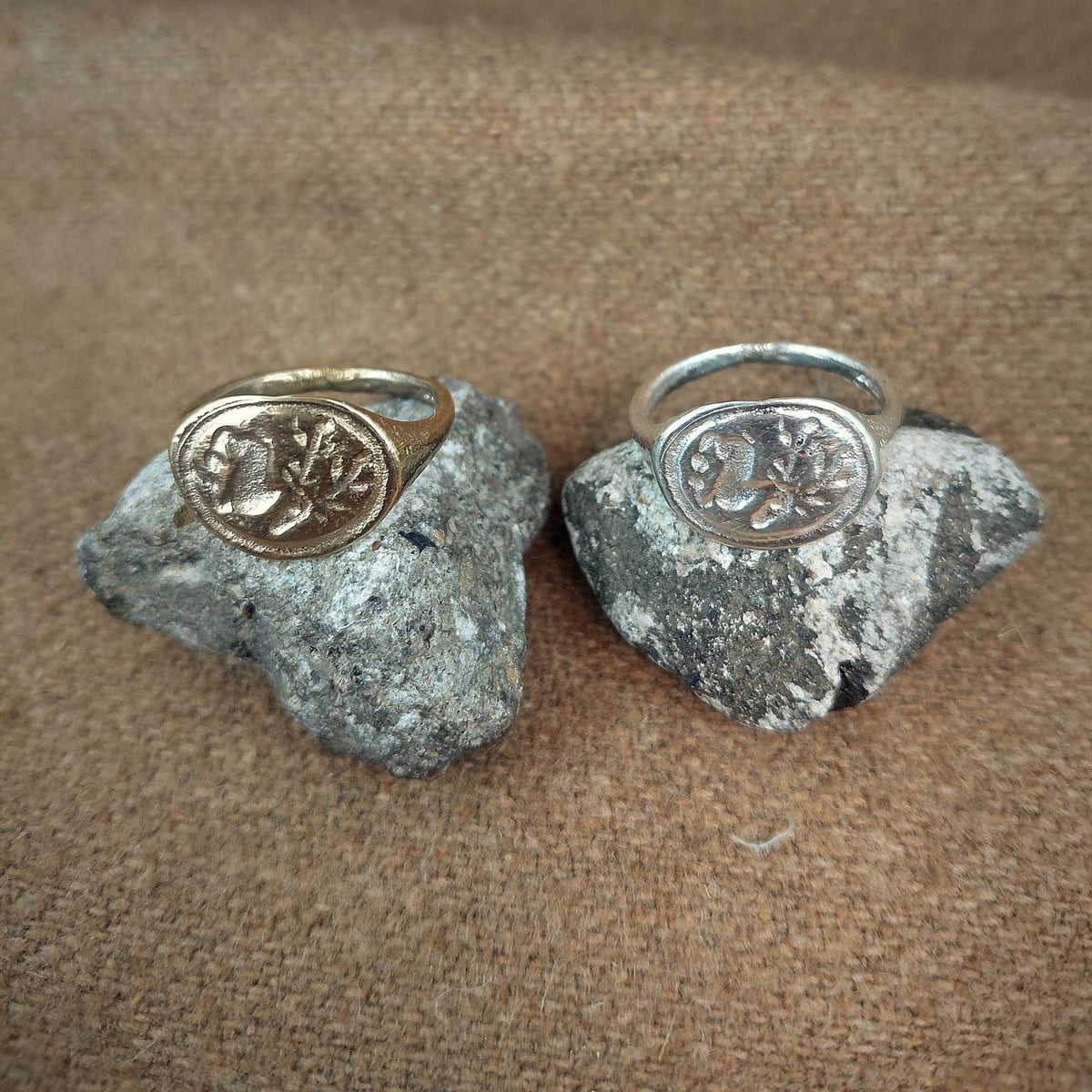
Direct casting from an original find creates an unusually close physical relationship between past and present. The original artefact is used to create a faithful model, from which a new ring may be cast in sterling silver, gold or platinum. The method retains the minute surface character and sculptural qualities that are often lost when an object is redrawn by eye.
Casting is only one stage. Each ring needs careful finishing, sizing and polishing by hand. Edges may need to be refined so that they sit comfortably against the hand, while the central motif must remain clear rather than being polished into softness. This is where workshop judgement matters. The goal is not a lifeless copy, but a wearable piece that honours the original form.
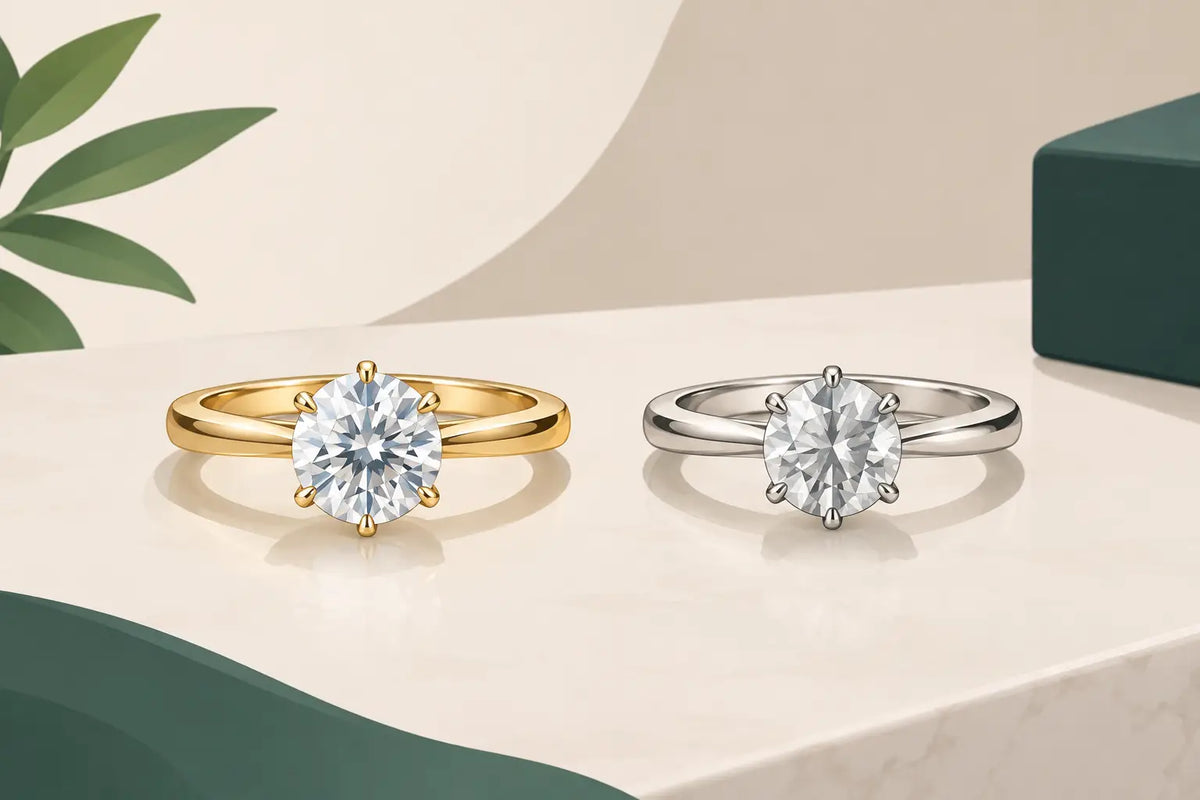
Metal selection adds another layer of choice. Sterling silver has a pale, historic character and can emphasise crisp pattern and relief. Gold introduces warmth and ceremonial weight, making it particularly suited to commitment jewellery. Platinum offers a naturally white tone and exceptional durability, though its density gives it a different feel on the hand and affects the final price. There is no universally correct metal. The right choice depends on the wearer, the design and the role the ring will have in daily life.
Where a historical design is adapted to hold a ruby, emerald, sapphire or carnelian, the setting should feel considered rather than imposed. Gemstones can deepen a ring’s personal significance, but they also alter its historical reading. Carnelian, for example, has a long association with Roman jewellery and seals, while a modern sapphire choice may speak more directly to the wearer’s own story. Both approaches can be valid when they are presented plainly.
Hallmarking is part of the promise
Precious metal jewellery should carry proof of what it is. In the UK, independent hallmarking confirms the fineness of gold, silver, platinum or palladium, offering reassurance that a ring is not simply described as precious metal but tested as such.
For a piece intended to become an heirloom, this matters. A hallmark from the London Assay Office places the ring within a long British tradition of metal standards and maker accountability. It is a small mark, often tucked discreetly inside the band, yet it gives practical substance to a purchase rooted in heritage.
Hallmarking should not be confused with archaeological provenance. It verifies the metal in the new ring, not the age of the source artefact. Together, however, these forms of evidence tell a fuller story: one establishes where the design came from, and the other confirms how the modern piece has been made.
Choosing a ring that will remain meaningful
The most successful historical ring is not always the most elaborate. A bold Roman-inspired bezel may suit someone who wants an unmistakable statement, while a narrow engraved band can offer a quieter link to the past. Consider how the ring will be worn. An engagement ring, a wedding band and an occasional dress ring each invite different decisions about profile, stone setting and metal.
It is also worth thinking about scale. Archaeological originals were made for bodies and customs unlike our own, so an exact visual reproduction may feel broader, heavier or more textured than a conventional high-street ring. That presence is often the appeal. Yet comfort should be part of the decision, especially if the ring will be worn alongside another band or throughout the working day.
Ask for the historical context behind the design. A credible maker should be able to identify the source period and find location, explain whether the piece is cast from the original or developed from it, and state the metal and hallmarking clearly. British Historical Jewellery builds its pieces around these details, making the original artefact’s story available alongside the finished ring rather than treating it as an afterthought.
A modern heirloom, honestly made
A reproduction ring is not less meaningful because it is new. Its value lies partly in that newness: it has been made for a living hand, a present-day promise and future memories. Unlike an archaeological original, it can be worn without removing an irreplaceable object from public heritage.
There are trade-offs. Directly sourced designs may have unusual proportions, limited stone options or a more distinctive finish than a conventional jewellery design. They may also cost more than mass-produced historical-style pieces because individual casting, hand-finishing and assay work take time. For those who value provenance, these are not inconveniences but evidence of care.
Choose the ring whose history you will want to tell. Whether its origin lies in Roman Britain, an Anglo-Saxon burial or a medieval devotional tradition, the finest piece is one that feels at home in your life while remaining faithful to the story that first gave it form.