Article: Medieval Stag Signet Ring: An Essex Find Reproduced
Medieval Stag Signet Ring: An Essex Find Reproduced
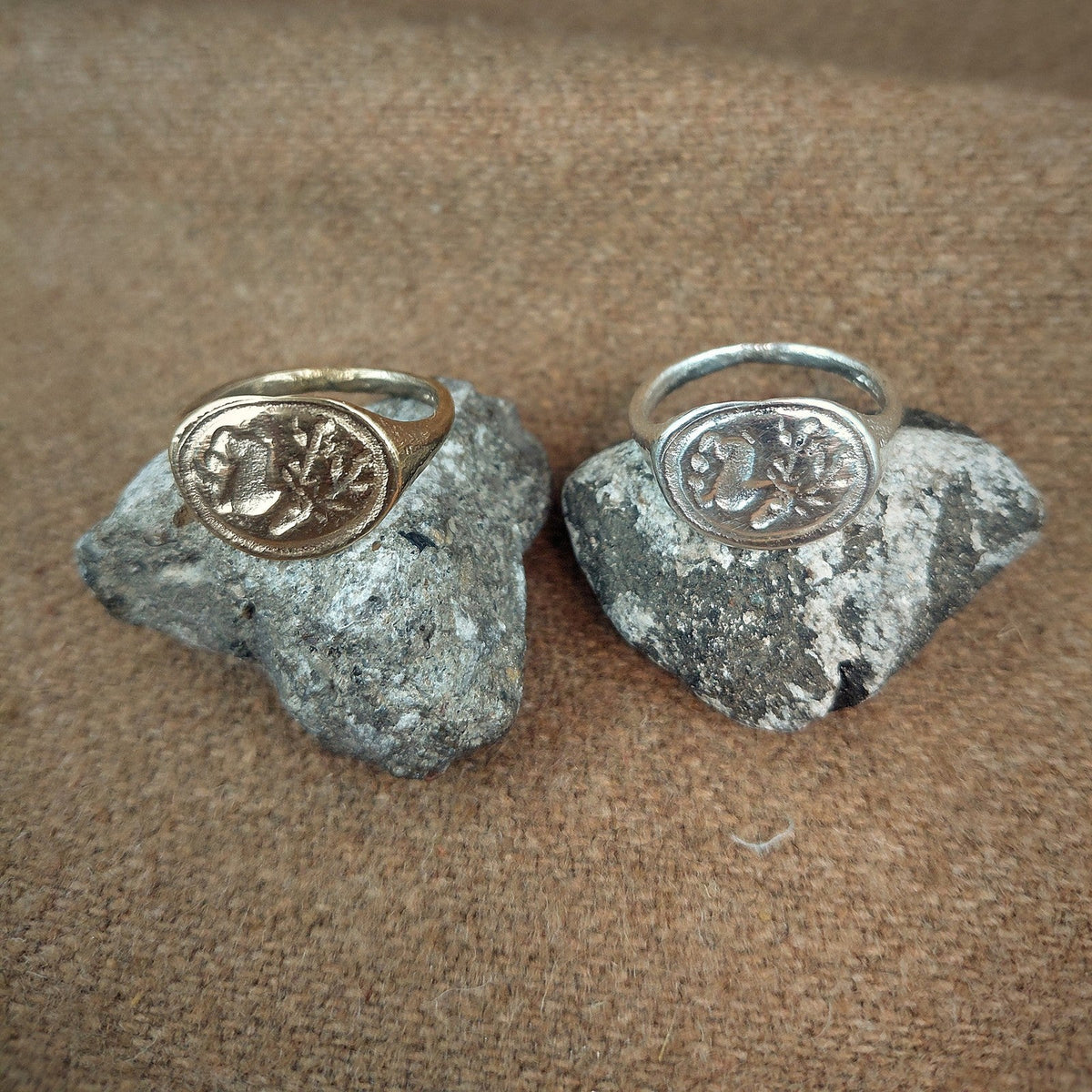
Some finds stop me mid-sentence. The Essex stag signet is one of them: a medieval ring from the 15th century, found in Essex, with a stag engraved across the face of its oval bezel. It is small, worn and unmistakable, and I have been looking forward to putting it into the collection.

What a signet ring was for
A signet is a working ring. In medieval England a letter was folded, a blob of hot wax was dropped on the fold, and the ring was pressed into it. The impression closed the letter and told the reader who had sent it. At a time when a signature meant very little, a seal was what made a document yours.
The design was cut into the bezel so that the wax took it up the right way round, which is why a signet is engraved quite differently from a ring made only to be looked at. Seals began with kings and great lords, but by the later Middle Ages merchants, churchmen, townspeople and women were using them too. For many people a seal ring was the nearest thing they owned to a personal signature, and the picture on it was chosen with care.
Why a stag?
A stag, or hart as the medieval word has it, is a mature male red deer, and it ran through the imagery of the period in several directions at once.
The first is the hunt. Deer hunting was the pastime of kings and nobles, and venison was a privilege. Large areas of land, Essex included, were royal forest or private deer park, with their own harsh laws. A hart on a ring could say something about rank and the life that went with it.
The second is heraldry. Hart badges were worn by noble households, and the best known is the white hart of Richard II, who ruled from 1377 to 1399. He and his household wore it in the 1390s, and the angels in the Wilton Diptych in the National Gallery wear it too. Plenty of English inns still carry the name White Hart because of that badge.
The third is faith. The psalmist writes of the hart that longs for water brooks, and the legends of St Eustace and St Hubert both have a stag with a crucifix between its antlers. A medieval person looking at a stag could see a hunter's quarry, a lord's badge or a soul in search of God.
Which of those the original owner of this ring had in mind, nobody knows. No document survives to say. What we do have is the ring, and the stag is clear enough on the bezel to be worth recreating.
The Essex find
The ring is plain apart from its face. The hoop is simple and sturdy, and all the interest is on the oval bezel, where the stag is engraved. The millimetre scale in the museum-style photographs shows how small it is, which makes the engraving more impressive. It is a late medieval ring, from the 15th century, and it was found in Essex.
From the find to the bench
I take a mould from the original find and cast a new ring from it, so the engraving and the outline are the original's own. The casting then comes to my bench and I restore it by hand, working the stag back to a crisp edge and finishing the surface until the ring looks the way it did when it was first worn. The shoulders are shaped and smoothed so it sits comfortably on a finger, because a ring this old should be worn rather than put on a shelf.
The original stays exactly as it was found. It is not restored and it is not for sale. The ring you buy is a new piece, and every one is cast and finished individually, one at a time, in my own workshop.

Silver, gold or platinum
The Essex stag signet is made in sterling silver, 9ct gold, 18ct gold and platinum. Each one is hallmarked at the London Assay Office, so the metal is independently tested and stamped before the ring leaves me. UK sizes run from C to Z+6.
The metals suit the ring differently. Silver has a cool, soft look that brings out the line of the stag. 9ct gold is the warm everyday choice. 18ct is richer and heavier on the hand, and platinum is the most lasting of them. If you are unsure, tell me how you will wear it and I will say which I would pick.
Made by one maker
I have worked as a self-employed jeweller since 2006, I am a member of the Guild of Master Craftsmen, and everything at British Historical Jewellery comes out of my independent workshop in Britain. I take the finds seriously and the casting seriously, and I like the idea that someone in the 21st century will be pressing wax with a stag that was first engraved hundreds of years before they were born.
See the ring
You can see every view of the ring, in silver and in gold, on the Essex Medieval Stag Signet page. If you like medieval signets generally, the Essex Lombardic Signet is another find from the same county, and the rest of the range is in our medieval jewellery collection. You can read more about how we cast the original designs too.